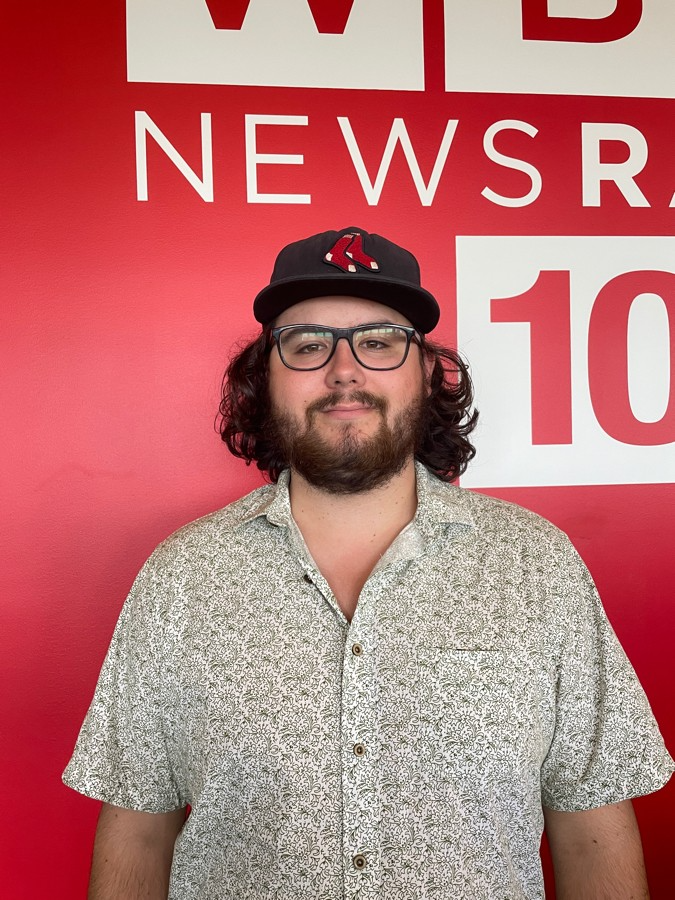
All it took to kickstart the newest chapter in Dan Adam’s career was to raise his hand.
It was 2017 and the Boston Globe was looking to create a position for a reporter to cover one of the newest legal industries in the commonwealth—Marijuana. Massachusetts voters chose to legalize marijuana for recreational use in a ballot question that passed with 53.7 percent of the vote. They had voted to decriminalize the drug in 2008 and later voted to legalize medical marijuana in 2012.
Adams, 34, who had been at the Globe since he was part of its co-op program for college students, volunteered because he had covered the alcohol industry in Massachusetts and he was interested in this new legal drug industry. He said he felt obliged to do it because he believed that coverage of cannabis by mainstream media had missed the mark in the past.
“This is a subject that the media has been terrible at covering for a really long time and it seemed important to me that we take a thoughtful approach to it and do something better than pandering to stereotypes,” Adams said in a phone interview from his home. “I thought this was something that would have serious implications for not only public health and public safety but for something some people use as a medicine or recreationally more or less harmlessly. I didn’t want our coverage to have that overwrought, arms -length tone that the vast majority of journalism about cannabis had.”
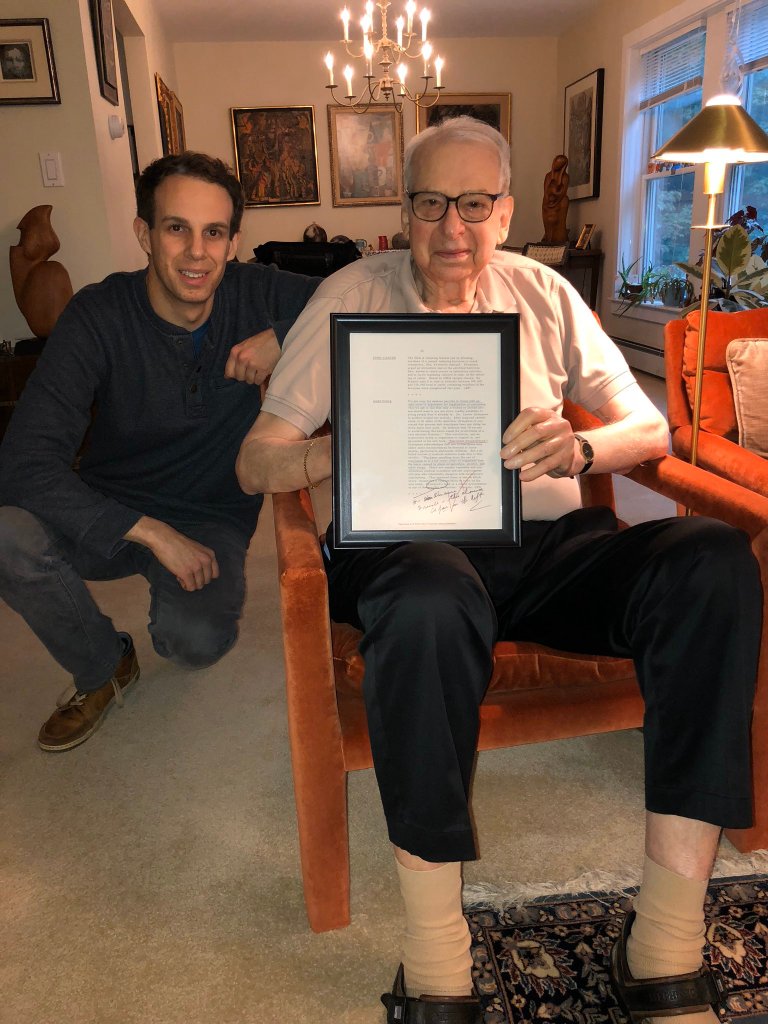
Adams began reporting the beat in 2017 while also starting a weekly cannabis newsletter for the Globe called This Week In Weed which now boasts over 150,000 subscribers. As web traffic on Adams’ stories and newsletter grew, the Globe decided in 2018 to follow in the footsteps of the Denver Post and create a dedicated Marijuana vertical with a team of reporters and editors to work with Adams. He teamed up with Felicia Gans, 25, who had been working at the Globe as a web producer, and Noami Martin, 31, a new hire from the Dallas Morning News, along with a group of editors to form the Globe’s first Marijuana section. For Gans, the opportunity to cover the industry in its infancy was exciting.
“There’s a whole world of covering marijuana where it changed people’s lives and to say that it made some people’s lives better is the understatement of the year,” Gans said. “For some people it is literally what makes it possible for them to continue working, continue waking up in the morning without pain, and being able to sleep through the night. Marijuana does so much for people.”
The section grew steadily with some of their more longform reporting pieces doing extremely well on the Globe website and placing consistently in the “Most Read” section. They even collaborated with the Globe’s spotlight investigative section to produce a two-part series on how the state was failing to uphold its promises of equity in the marijuana industry. However, the COVID-19 pandemic had a great impact on the section, as both Gans and Martin switched to reporting on education for the Globe full time to help cover how schools in Massachusetts were handling the pandemic. Adams still serves as the Globe’s marijuana reporter, but now without his team.
While he said there are some media outlets that are doing a good job covering cannabis, Adams said he hopes more outlets will commit to “serious” journalism about marijuana.
“I see a huge need nationally for more traditional journalism institutions to dedicate even just one person [to covering cannabis], someone who can really get to know it inside out and write well about it,” Adams said. “I just don’t see that happening enough.”
Adams, Martin, and Gans spent years covering marijuana at the largest newspaper in Boston, and here’s some advice that they have for journalists who may cover cannabis.
Equity in Reporting
Although Marijuana is legal in 15 states and the District of Columbia as of November 2020, the U.S. has a still-ongoing racial disparity amongst those arrested for possession of the drug. In 2018 alone 663,367 people were arrested for cannabis law violations, according to FBI crime statistics. However, 608,775 of those arrests only were for possession of the drug, which is now legal in nearly a third of the country. In 2018, 27 percent of the arrests for drug offenses were Black though they compose about 13 percent of the population.
Adams said that as a cannabis reporter it is necessary to understand the effects that the enforcement of drug laws has on the country as a whole, but specifically on Black people.
“You can’t really write honestly about marijuana if you aren’t writing the way that the war on drugs was waged, not only on people of color but Black and brown people specifically,” Adams said.
In their reporting, the Globe team said they stressed that it is necessary for them to talk to the people and the families directly affected by drug laws. Martin used her background as a crime reporter for The Times-Picayune in New Orleans to help her see the need for more equity when reporting on cannabis now that it was legal.
“I had seen all of the worst sides of prohibition up close,” Martin said. “When I came to this job I had the background of the worst sides of the alternative to legalization.”
Adams said the best way to make sure a reporter is promoting equity in their work is to do a thorough audit of their sources and who they are quoting along who they aren’t quoting.
“Every single story you have to ask whom you’re quoting and am I just going through the same Rolodex of white dudes because it’s convenient,” Adams said. “It’s really easy to fall into that and I’m sure that if I went back into my career I fell into that sometimes as well.”
Derrell Black, the Massachusetts chapter president for Minorities for Medical Marijuana, said he was happy to see cannabis given fairer coverage in the media, but wants reporters at places like the Globe to do more to reach out to and report on urban communities that were disproportionately affected by marijuana laws.
“They report on the new things that are going on with delivery and everything cannabis that’s going on. They do a very good job at updating everybody,” Black said. “Now do they do a good job of actually coming into the urban communities? I wouldn’t say so.”
Black said that as someone who works directly in the industry, he wants to see more equity in reporting and see more journalists going to urban communities.
“You have to go to Roxbury, you have to go to Dorchester, and you have to go to Mattapan,” Black said. “I see plenty of [journalists] go to suburban expos, meetings, and seminars but they don’t walk a foot into some of my community outreach meetings.”
Focus on Policy Work
While covering the marijuana beat in Massachusetts, the Globe team spent a lot of their time covering public meetings.
Since the marijuana industry is still relatively new in Massachusetts, there is a lot of government oversight of the industry as it grows, predominantly from the Cannabis Control Commission. The state government established the commission after the vote to legalize.
Much of Adams’ time as a reporter on the marijuana beat is spent covering hearings and meeting with the CCC staffers. He said these were some of the most important stories to tell because the policies will affect the general population and being able to explain them to readers is an invaluable skill.
“People want to be a weed reporter and then you’re like ‘ok you want to sit through a five and half hour long public meeting where they’re going over some regulation?’ But you gotta do it,” Adams said. “I would really encourage people to get experience reporting on policy, politics, and regulation wherever they can because it will serve them really well when they get the opportunity to cover marijuana.”

These meetings also provided the Globe team with the opportunity to hear directly from the stakeholders in the industry about how the policies and regulations affected them. Martin recalled a tense meeting she attended where Black and Latino business owners were angry at the CCC.
“They were saying that getting into this business was impossible and they had taken out as many loans they could to try to make it work, but the process was so cumbersome and full of bureaucracy,” Martin said. “Sitting there and listening to story after story about this was really heartbreaking.”
Go out and get Experience and meet People
There are a lot of different people with a role in the marijuana industry, whether they be the businesses, the government, activists, consumers, or opponents. Adams, Gans, and Martin all agreed that one of the best ways to become a good marijuana reporter is to go out and get experience being in these environments and meeting the people involved. Going to events constantly and meeting those involved the industry helped Adams greatly when he first started out on the beat.
“I went to tons of community events because as the industry was booting up, every law firm, consultancy, business association, nonprofit, and activist group were having meetings like every other day,” Adams said. “I just ran around Boston and was willing to stand outside and smoke a joint with these guys and talk to them for real. It allowed me to make genuine connections with these people and hear their voices.”
One standout moment for Martin came right before the pandemic, at the opening of Pure Oasis, a black-owned dispensary in Dorchester that hired people who had been affected by marijuana laws in the past. She was there the night before the opening when a man selling fruit from a cart came into the store and sold the workers food. The man told them all how happy he was to see them open because the influx of customers could help his business, she recalled.
“We hear a lot on the policy level about how this is going to bring economic benefit or how it will be really bad for the city because it will get kids addicted,” Martin said. “We hear all these arguments but it was just nice to see some of those impacts up front in the positive way…it was this nice atmosphere of people having a space where they felt like they belonged.”
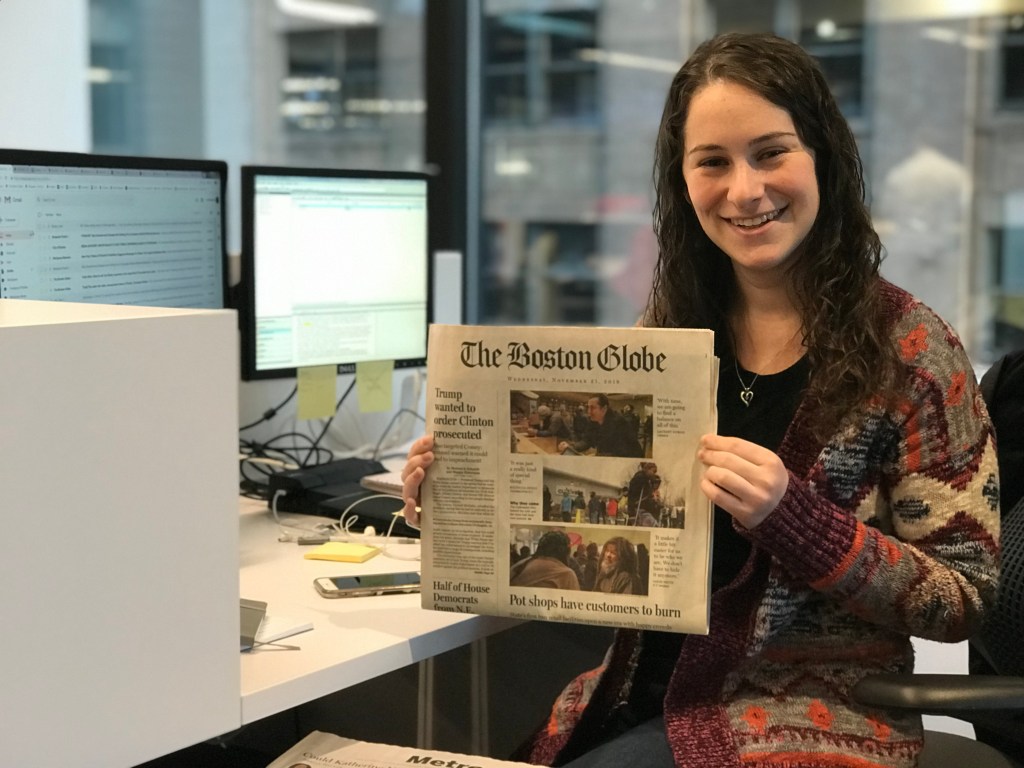
For Gans, the most meaningful experience on the beat was covering the opening of the first recreational marijuana store in Massachusetts, about 50 miles outside of Boston in Leicester. It was a cold, rainy, and dreary day, but that did not hurt the enthusiasm of the eager customers. The first person in the line for the opening had a video camera and much like Gans, was excited to document this important day in the history of Marijuana legalization in Massachusetts.
“There are some moments you have as a journalist where you have this out of body experience and you look around at your settings and realize I am really documenting history,” Gans said. “I remember coming home that night and being like ‘wow I’ll get to tell my grandkids someday that I was at the first pot shop opening [in Massachusetts].”
 Kyle Bray
Leave a comment